
Lawrence S. Poston († 2025)
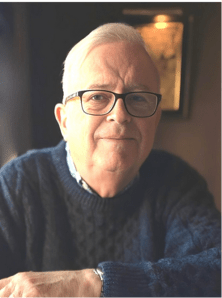
We wish to pay tribute to our much-beloved founder, distinguished professor, administrator, and scholar Lawrence S. Poston.
Lawrence (“Larry”) Sanford Poston III, was born in 1938 in Louisville, Kentucky, the son of Lawrence and Nancy Greene Poston. He was raised in Galesburg, Illinois and Norman, Oklahoma, and after graduating from the University of Oklahoma, earned an M. A. and Ph.D. in English from Princeton University in 1963 with a dissertation on ”Five Victorians on Italian Renaissance Culture: A Problem in Historical Perspectives” devoted to work by John Ruskin, Robert Browning, George Eliot, Walter Pater, and John Addington Symonds. The same breadth of knowledge and perspectives would characterize his scholarly publishing career, with a steady appearance of articles on figures ranging from Henry Taylor and Thomas Adolphus Trollope to John Henry Newman, the focus of his distinguished post-retire monograph published by the University of Virginia Press. After teaching for ten years at the University of Nebraska-Lincoln, he moved to the University of Illinois at Chicago in 1976, where he served as chair of the Department of English and later as senior associate dean until retirement in 2004.
It was Larry Poston who first proposed the idea of an interdisciplinary Victorian Studies organization in 1976, reaching out to his fellow professors and others in the fields of music, history, art, science, and literature to form an initial planning committee. The first MVSA conference was held in 1977 in Chicago jointly with the Research Society for Victorian Periodicals, with independent conferences following thereafter, first in 1978 at the University of Illinois at Champaign-Urbana, and in 1979 at Washington University, St. Louis, and afterwards in every succeeding year. Larry served as the organization’s first executive secretary (1977-80; later Vice-President and President 1986-90), and continued his active support throughout his life.
Early conference speakers included historians Joseph Altholz, Jeanne Peterson, Gertrude Himmerfarb and Rosemary Jann, art historian Susan Casteras, and biographers Katherine Frank and Esther Shkolnik, and a precedent was set by the inclusion of speakers from other regions of the United States and from abroad. Importantly, each conference also featured a reenactment or celebration of some aspect of Victorian culture—a concert, group singing, a visit to local Victorian-era buildings, even a Victorian dinner and ball.
A list of his extensive publications and academic service appears below.
Larry Poston is remembered warmly by all who knew him as a broad-minded and sociable man with wide intellectual interests and a wry sense of humor. In private life he was devoted to his family. He is survived by his wife Carol (Hoaglan) Poston, whom he married in 1966 (former professor at Xavier College and author of, among other publications, Reclaiming Our Lives and editions of Mary Wollstoncraft’s A Vindication and Eveyln Underwood’s Letters), as well as a daughter and two grandchildren.
A list of his extensive publications and academic service appears below.
Publications and Academic Service
Professor Poston is the author of two monographs, Loss and Gain: An Essay on Browning’s Dramatis Personae (University of Nebraska, 1974) and The Antagonist Principle: John Henry Newman and the Paradox of Personality (University of Virginia Press, 2014), as well as periodical articles in Nineteenth-Century Fiction, Victorian Poetry, Victorian Studies, Studies in Romanticism, PMLA, English Literary History, Studies in English Literature, Criticism, Genre, Philological Quarterly, Bulletin of the John Rylands Library, Texas Studies in Language and Literature, Modern Philology, and the Anglican Theological Review.
His book chapters include contributions to Nature and the Victorian Imagination, ed U. C. Knoepflmacher and G. B. Tennyson (University of California Press, 1977), A Companion to Victorian Literature and Culture, ed. Herbert F. Tucker (Oxford: Blackwell, 1999; 2nd ed. Blackwell and Wiley, 2014), and The Subverting Vision of Bulwer-Lytton: Bicentenary Reflections, ed. Allan Conrad Christensen (University of Delaware Press, 2004). He contributed the entry on John Henry Newman to Blackwell’s Encyclopedia of Victorian Literature, ed. Dino Felluga, Pamela K. Gilbert, and Linda K. Hughes (Blackwell and Wiley, 2015), and was a member of the editorial board of Review 19: New Books on Line since its inception in 2008.
Professor Poston also served the Modern Language Association of America in several capacities, including as chair of the Academic Freedom and Tenure Committee (1978-80) and of the ad hoc Committee on Professional Ethics which developed the first MLA statement on the subject (1987-91). He held the post of Second Vice-President of the American Association of University Professors from 1988-90, and has published several articles and reviews in the field of higher education. A resident of Galena, Illinois since 2011, for many years he was an active member of the Education and Scholarship Commission of the Galena Territory Foundation.
Nicholas Temperley (†2020)
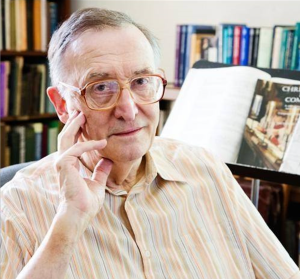
In the Fall of 2019, the Executive Board of the Midwest Victorian Studies Association unanimously voted to honor Nicholas Temperley, Professor Emeritus of Musicology at the University of Illinois and one of our society’s founders, for the MVSA Lifetime Achievement Award.
In terms of both their academic distinction and impact, Nicholas’s contributions to scholarship on the Victorian era and to the Midwest Victorian Studies Association have been nothing short of outstanding. As Linda Hughes writes, “It is one thing to publish quantities of print; it is another thing entirely to shape a scholarly field,” referring to his immensely important research and writing on British music and musical life, especially in the nineteenth century. These contributions literally put Victorian music on the musicological map at a time when the study of British music was considered irrelevant by most music historians.
Among his several books, editions of music, and dozens of articles and essays are many publications that have been read, devoured, and much cited by more than one generation of scholars. These publications include his path-breaking two-volume study, The Music of the English Parish Church (Cambridge University Press, 1979; 3rd edition, 2006), his Hymn Tune Index (a seminal, now online, catalog of hymn tunes with English-language texts up to 1820, funded by a significant NEH grant), his Bound for America: Three British Composers (University of Illinois Press, 2003), and several edited essay collections, including the volume on the Romantic Age in the Athlone History of Music in Britain series (Athlone, 1981), Music and the Wesleys (edited with Stephen Banfield; University of Illinois Press, 2010), and Musicians of Bath and Beyond: Edward Loder (1809-1865) and his Family (Boydell, 2016). He also co-edited, with Linda Hughes, The Lost Chord: Essays on Victorian Music (Indiana University Press, 1999), a collection of essays that arose from a session he organized for an MVSA conference.
Meanwhile, Nicholas has been a regular presence and speaker at MVSA meetings for more than forty years, serving as President from 1984 to 1986. He has also been an active contributor to activities, hosting conferences and organizing many memorable musical performances. As Hughes points out, his reputation as a scholar and centrality in the organization has meant that other musicologists have been drawn to our ranks. She writes: “If Nicholas opened up the scholarly field of British music, he also deepened the interdisciplinarity of MVSA from its beginnings, which has now grown into the very fabric of MVSA and what sets it apart.” Moreover, he introduced to MVSA his former student, Alisa Clapp-Itnyre, scholar of Victorian hymnody and of music in Victorian literature–a happy development that led to her serving for several years as our Executive Secretary. In addition, Nicholas has encouraged many other students and scholars, including several of us within MVSA, with unending intellectual generosity and acts of kindness. In so doing he has always furthered the association’s mission of fostering understandings of the Victorians and promoting interdisciplinary exchange, collaboration, and publication.
Julie Melnyk († 2017)

In the Fall of 2017, the Executive Board of the Midwest Victorian Studies Association unanimously voted to honor Julie Melnyk with our inaugural MVSA Lifetime Achievement Award.
Julie Melnyk’s contributions to both Victorian studies and the Midwest Victorian Studies Association were remarkable. Her work on religion and doubt was extensive: she is the author of Victorian Religion: Faith and Life in Britain (Praeger, 2008), editor of Women’s Theology in Nineteenth-Century Britain (Routledge, 1998), and co-editor of Felicia Hemans: Reimagining Poetry in the Nineteenth Century (Palsgrave 2001) and Perplext by Faith: Essays on Victorian Beliefs and Doubts (Cambridge Scholars Publishing, 2015). Meanwhile, she was a driving force in the success and vitality of MVSA over more than twenty years, serving as our Treasurer, regularly presenting lively papers and contributing to discussions at MVSA conferences, and (most recently) convening and running our highly successful 2015 conference, “Victorian News: Print Culture and the Periodical Press,” at the University of Missouri-Columbia. In her work as a teacher, Julie introduced a new generation to the field with her engaging and empathetic pedagogical approach. Students consistently praised her passion and commitment to student learning. As one remarked, “I have yet to find another professor who has her blend of knowledge, passion and understanding. Her classes are always engaging; her attitude, always encouraging; her mind, always open.” Julie’s record of exceptional research, service, and teaching modeled the MVSA’s mission of fostering understandings of the Victorians and promoting interdisciplinary exchange, collaboration, and publication.
Click the following link to read the tribute written and delivered by former MVSA Executive Secretary Alisa Clapp-Itnyre at Julie’s memorial service, which took place on March 3, 2018.